Sandgate Community Garden: Update 2 February 2020

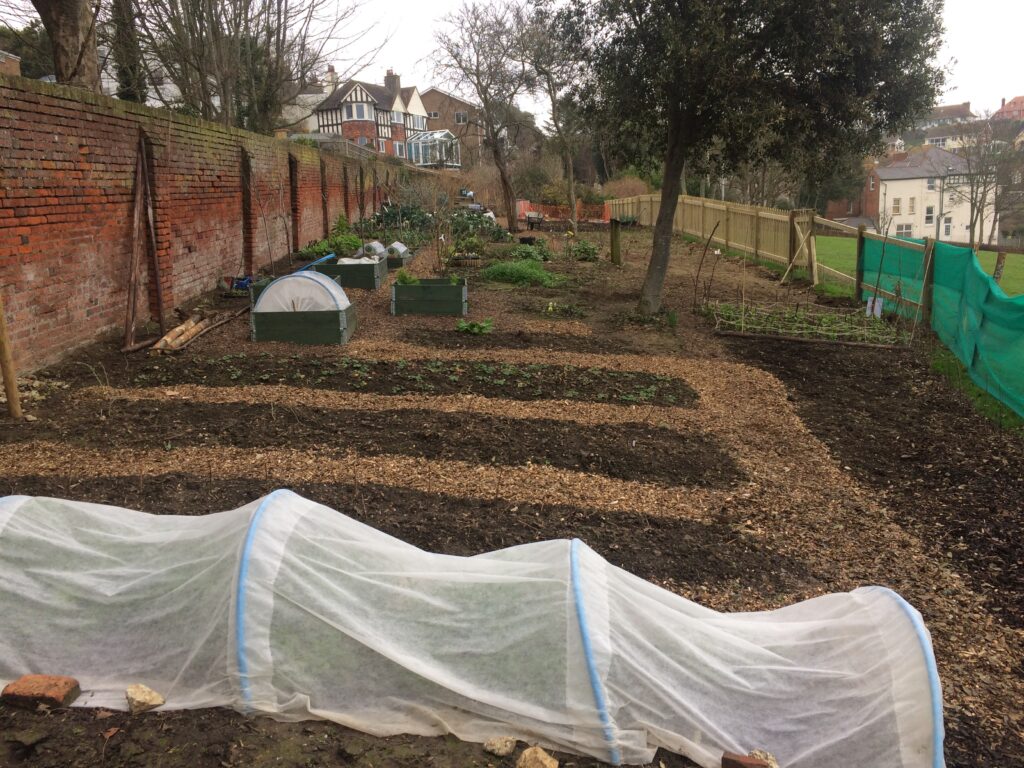
A reasonably quiet week, we are still trying to resolve the problem of getting hold of lots of compost to put on the garden to improve the soil, without having to part with lots of money, and we think we are about to solve it.  Having recently read an article about electro-mechanical composting machines that can convert garden and food waste into highly nutritious compost in just 14 days, we are beginning to feel quite envious!  However, this amazing machine is not to be our saviour – but who knows what the future may bring!

We inherited with the site a large patch of wild garlic which last year looked quite battered and sorry for its self, but by this week was looking very lush and had increased to twice its size.   So we dug up what seemed a small mountain of the stuff to put into many a dish, to include soup, stir fry and blitzed into a pesto – delicious.  All parts of the plant can be eaten, and the leaves can be continued to be picked throughout the year to be put with mixed salad leaves.

The pond has very nearly filled, and so the excess liner was cut away and the edges were tucked into the ground.  We still have lots to do to make the pond an attractive wildlife asset, but it is getting there.

It was high time we plotted where and what trees we had in the orchard, as two of the labels had already disappeared and it would be a shame not to know exactly what we have.  Officially the definition of an orchard is just five trees together, which does not seem very many at all.  Happily, with the addition in the next week or so of two more pear trees, we shall have double that number. 

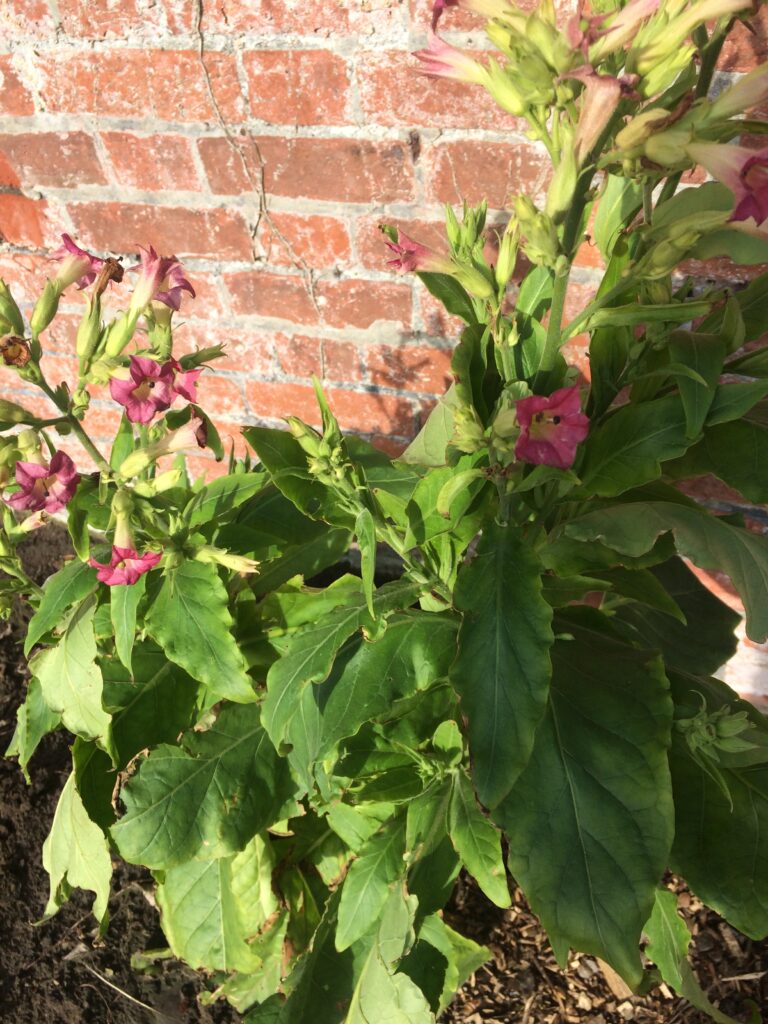
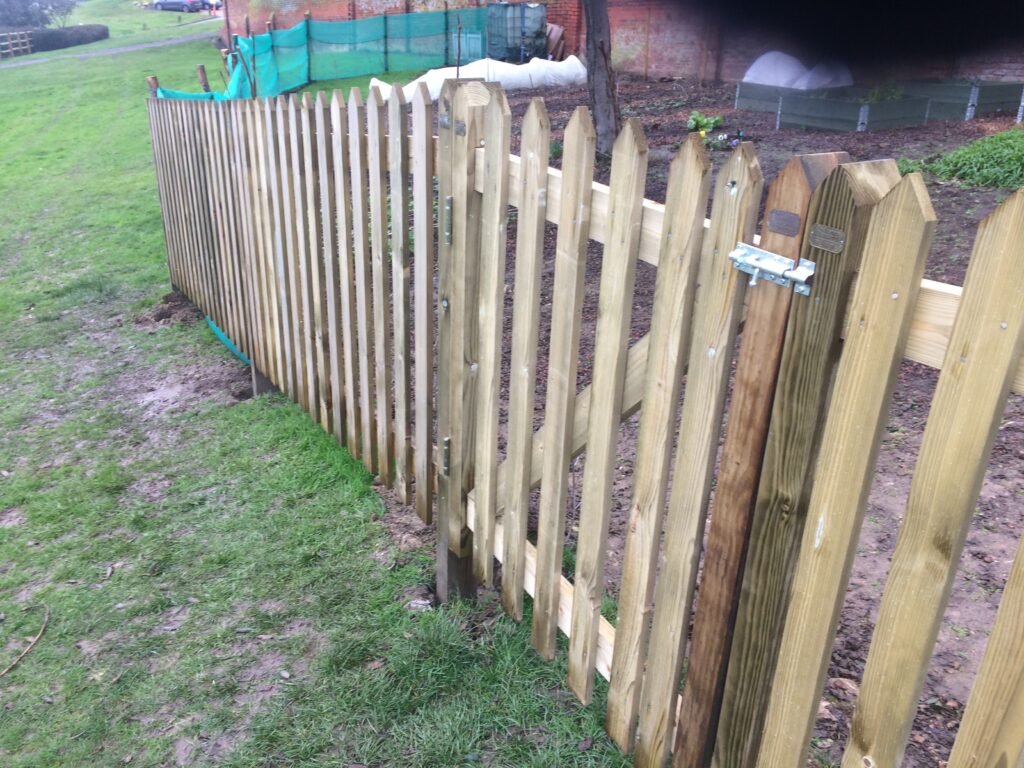
One of the pictures attached is of a patch of nicotiana or tobacco plant which is standing tall by the wall and has flowered all of January – simply amazing for this time of year and probably says something about how warm it has been so far this winter and how much shelter the wall gives, and how much heat it radiates.  Also attached is a picture of the last gate, hand crafted by Jeff, a Saga gardener – thanks Jeff!

What’s next?

  • It is all systems go to get the compost in place – subject to successful negotiations.
  • We have more posts that need to be put in against the wall for climbers and espaliers.
  • Spend some time to see if any birds are checking out our bird boxes and nesting materials.
Posted by Tim Prater in Sandgate Community Garden

Sandgate Community Garden: Update 26 January 2020

Having visited the delightful old fashioned shop in Cheriton opposite the library, we now have our seed potatoes chitting away on window ledges, waiting to be planted in the spring.  Here is what we will be growing:

Lady Christl – These were bought specifically for the nursery children as they are a very early variety, and the children will be able to experience harvesting them in June before they break for the summer holidays and change their nursery setting for Primary School.  This variety is recommended in many gardening forums and has an RHS Award of Garden Merit, having both excellent taste as well as good looks!  The harvest is ready in just 11-12 weeks after planting.

Charlotte – Is a waxy second early variety, easy to grow, and can be left for longer in the ground if not required for eating straight away.  Again it has excellent flavour, and is for harvesting mid to end of July.

Pink Fir Apple –   This is an old French variety which can be traced back to at least 1850.  It fell out of favour until it suddenly became popular again from 2000 onwards.  It has ‘top quality taste and texture’, it  stores well and is a main crop type being ready to harvest from mid to end of August.

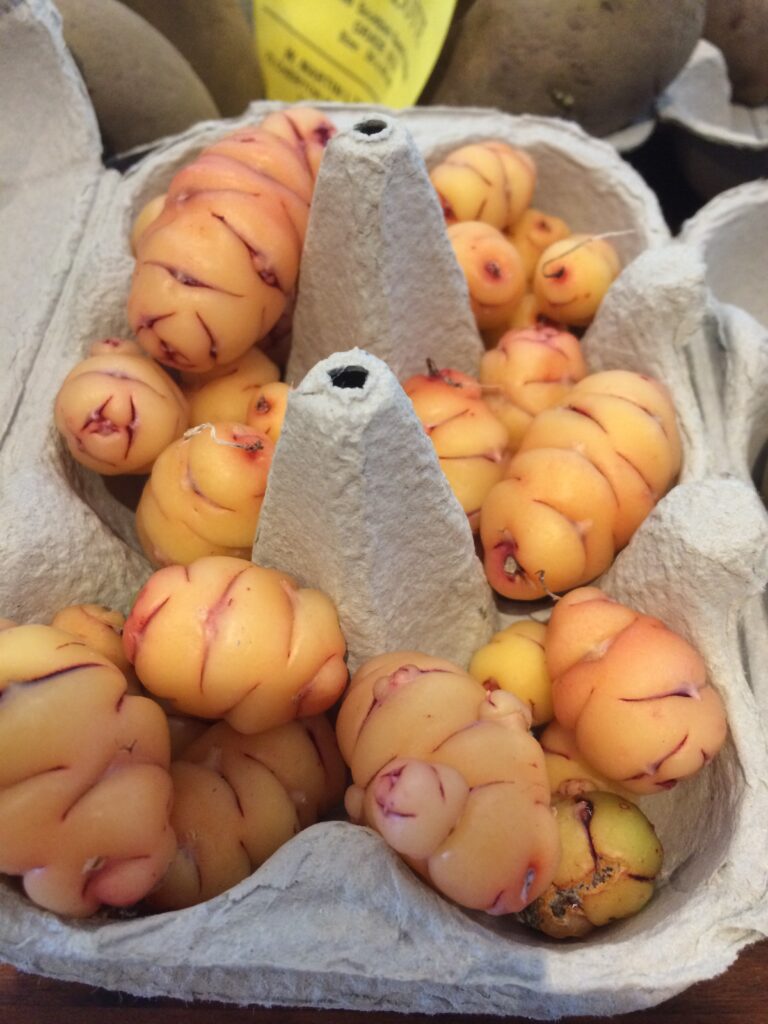
Oca –  This is not from the potato seed shop, but the seed tubers have been saved from a donated plant and then harvested in November to give us seed for this year (picture below – they look like fat yellow maggots!).  Oca is described as a lemony potato, the ‘lost crop of the Incas’ and a delicious alternative to regular potatoes and yams.  This perennial South American tuber has a slightly tangy flavour, crunchy when raw and starchier when boiled or baked.  It is harvested in the UK before hard frosts.  All of the plant can be eaten – the leaves are similar to wood sorrel, great in a salad;  the stems can be used as an alternative to rhubarb or gooseberries, in a pie.  We will be planting some in-between the garlic and onions as it is a great companion plant, filling the space once the garlic/onions have been harvested in July.  What is not to like about that?

The compost heaps got turned, the last time was probably late September or early October.  The decomposition process is much slower in the winter, but it still happens.   The bench has been moved and we continued to weed and tidy. 

The Saga gardeners kindly found some time to make us another gate, and continue the fencing right up to the windbreak.  Now we know where all the gates and entrances are, the hedging plants, growing in the way, were replanted in hedge gaps. 

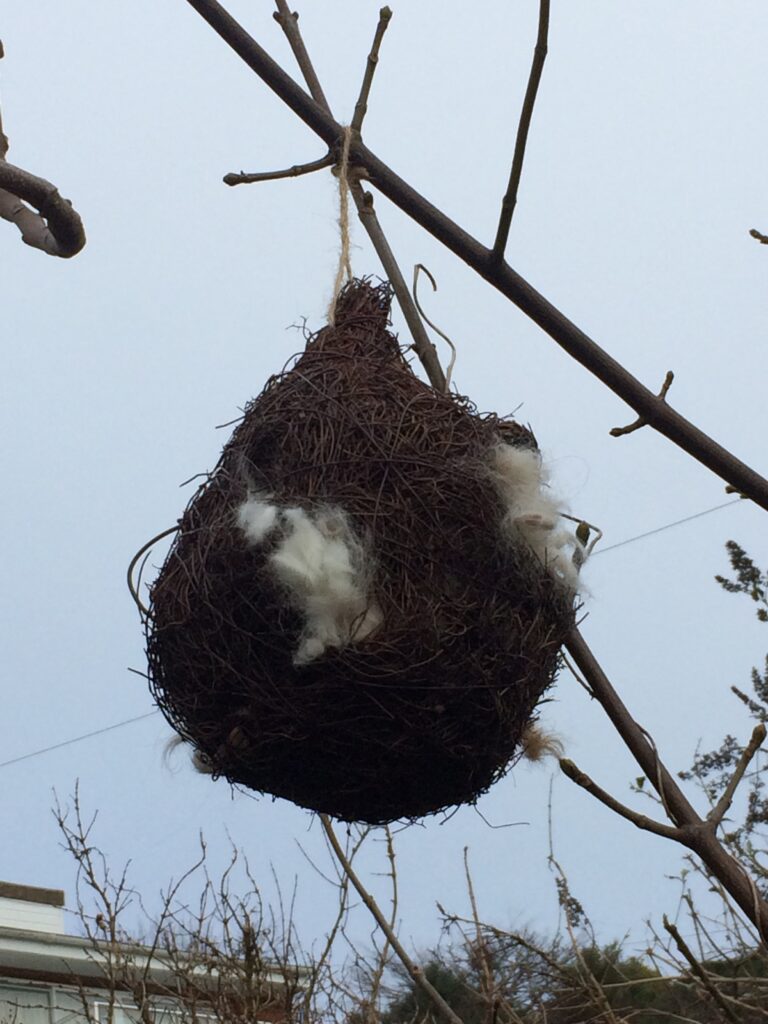
In preparation for the birds starting to build their nests, we asked for a bag of washed dog hair from the local groomers, stuffed it into a wicker ball full of holes, and hung it up in the trees for the birds to help themselves to.  There is probably a use for every waste material somewhere!

Bee hive news – we have it on good authority that the bees are still on schedule to arrive in the garden before the end of February.  Work is being done to prepare the hive stands.  Ray is the owner of the bees and hives – he recently moved into Sandgate and we commandeered him as soon as it was discovered he was an experienced bee keeper!  He will be relocating two of his hives to the garden, and will be ably assisted by one of our great garden friends, Chris.  Chris also has experience of bee keeping, and we are confident they will make an excellent success of the garden’s relationship with honey bees.

What’s next?

Progress is currently being held to ransom by a lack of compost…. We simply could not make enough to enrich all the ground space we have available to us.  So we are looking into how we can fix it.  In the meantime we have more tidying to do, and a few more plants to plant, before the seed sowing begins in earnest next month, and more perennial vegetable plants on order since Christmas, arrive in the post!

Posted by Tim Prater in Sandgate Community Garden